Our Support
Community led habitat restoration
WH Nature supports local communities, particularly private landowners within the corridor, to voluntarily restore degraded habitats. Rather than removing people from the land, we help them adopt nature-friendly practices that protect wildlife while sustaining their livelihoods. The aim is to reconnect natural habitats through a model that respects ownership and empowers stewardship.
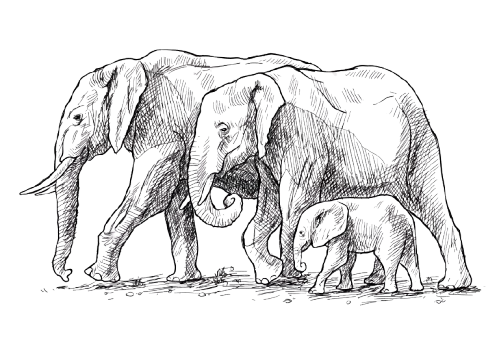
Our support helps them shift toward eco-tourism, sustainable agriculture, and other nature-based enterprises that align with conservation goals. These approaches allow communities to benefit economically while helping maintain open pathways for elephants and other wildlife
Monitoring and Ecological Potential Realization
Monitoring is a critical component of WH Nature’s work in the Londoiya–Kisimiri Corridor. We contribute to tracking elephant movements, habitat condition, and restoration outcomes, not only to inform our own interventions but to support evidence-based decision-making for partners, stakeholders, and government authorities. Our reporting feeds into the implementation of key national frameworks, including the National Wildlife Corridor Assessment and Action Plan, the National Elephant Management Strategy, and the National Human-Wildlife Conflict Mitigation Strategy. These strategies emphasize the importance of timely, accurate ecological data to inform zoning, land use planning, and corridor protection.
To meet these expectations, WH Nature is investing in technological tools, most notably drones and spatial monitoring systems as the most cost-effective and scalable way to collect and report data across the expansive corridor landscape. In accordance with Tanzania’s national guidelines on the use of drones for conservation and environmental monitoring, we seek the necessary licenses and permits to operate these tools responsibly. Drone-based monitoring enable us to produce high-resolution imagery, detect encroachments or blockages, document wildlife movements, and track habitat recovery over time. This data will be packaged into periodic reports and shared with stakeholders at village, district, and national levels, strengthening our transparency and supporting policy alignment across agencies.
Ultimately, our goal is to demonstrate, with measurable evidence, that community-led restoration not only works—but is essential for the long-term viability of wildlife corridors in Tanzania.